




Closing the Gap Between Skirting and Floor
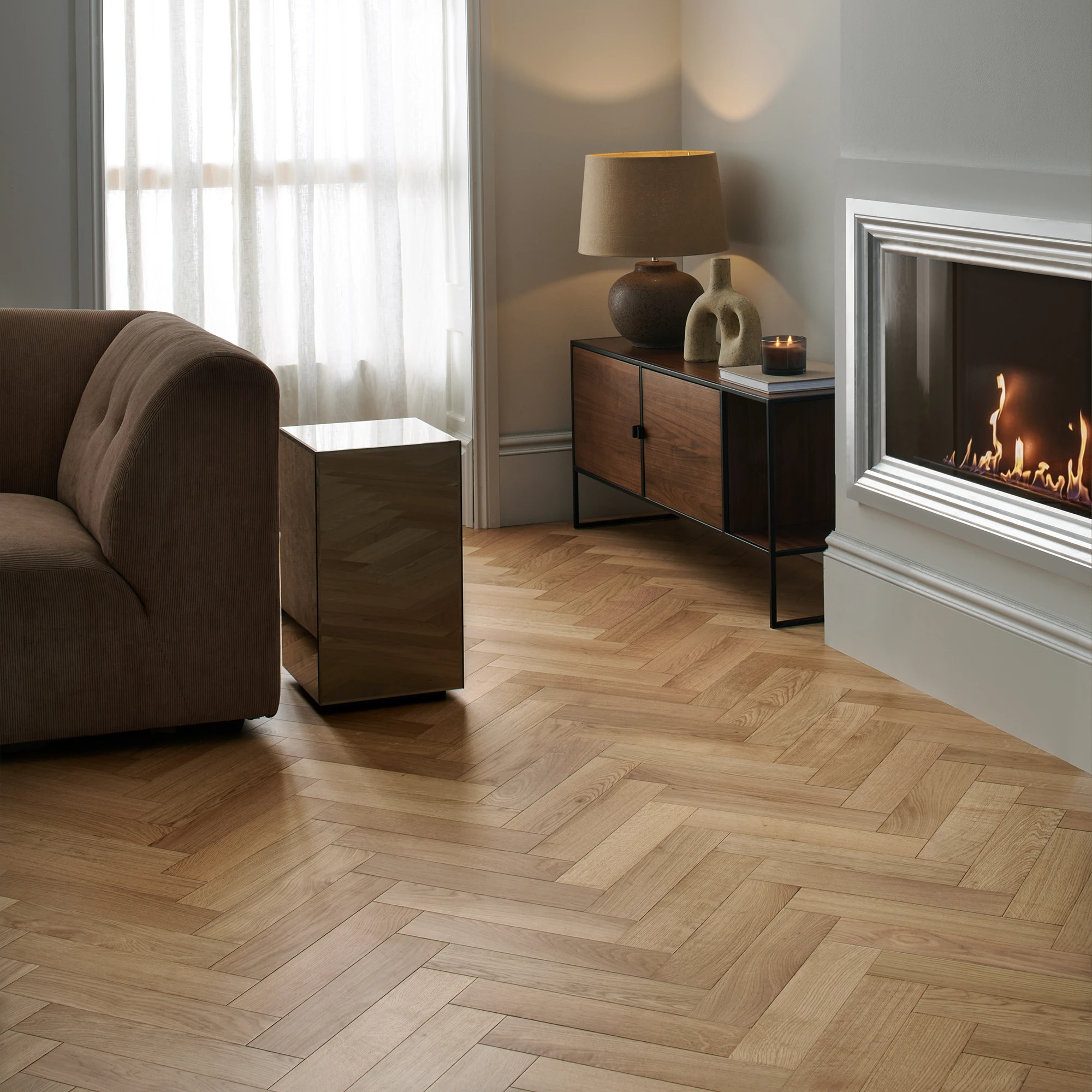
Bourton Natural Oak Herringbone
Seeing a gap between the skirting and floor can be frustrating, especially when you’ve invested in a beautiful wood floor. These spaces not only affect the look of your room, but can also collect dust and make cleaning harder. The good news is that there are practical solutions to bring a seamless finish back to your space.
Why Does the Gap Appear?
It’s quite common to notice a gap forming between the skirting board and your floor over time. This can be caused by:
- Natural expansion and contraction of wood due to changes in humidity
- Settling of the house or slight movement in the subfloor
- Installation, where the floor has been cut too short to allow for movement
Wood is a natural product, so it will always respond to its environment. Understanding this movement helps you decide how to deal with any gap effectively. You can read more about why gaps appear and how they behave in this guide on gaps in wood floor boards.
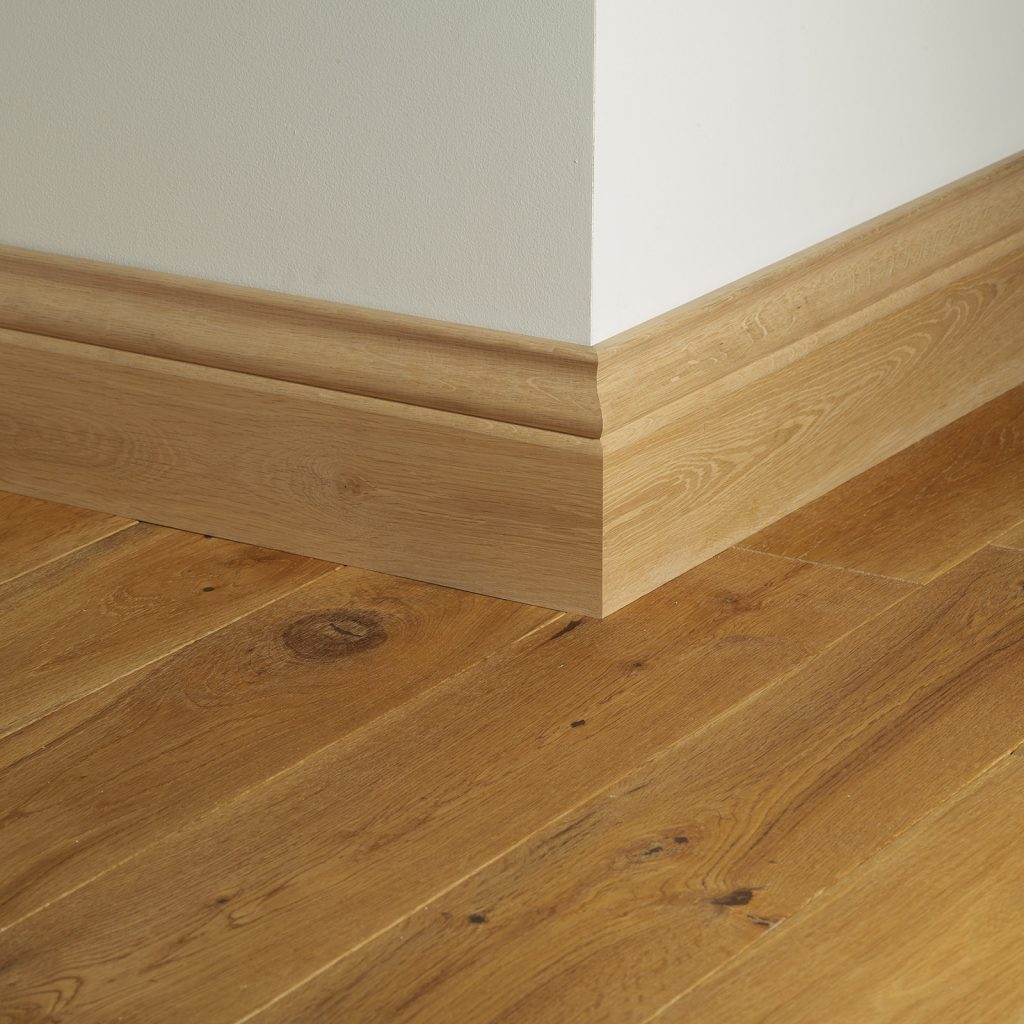
Solid Wood Skirting
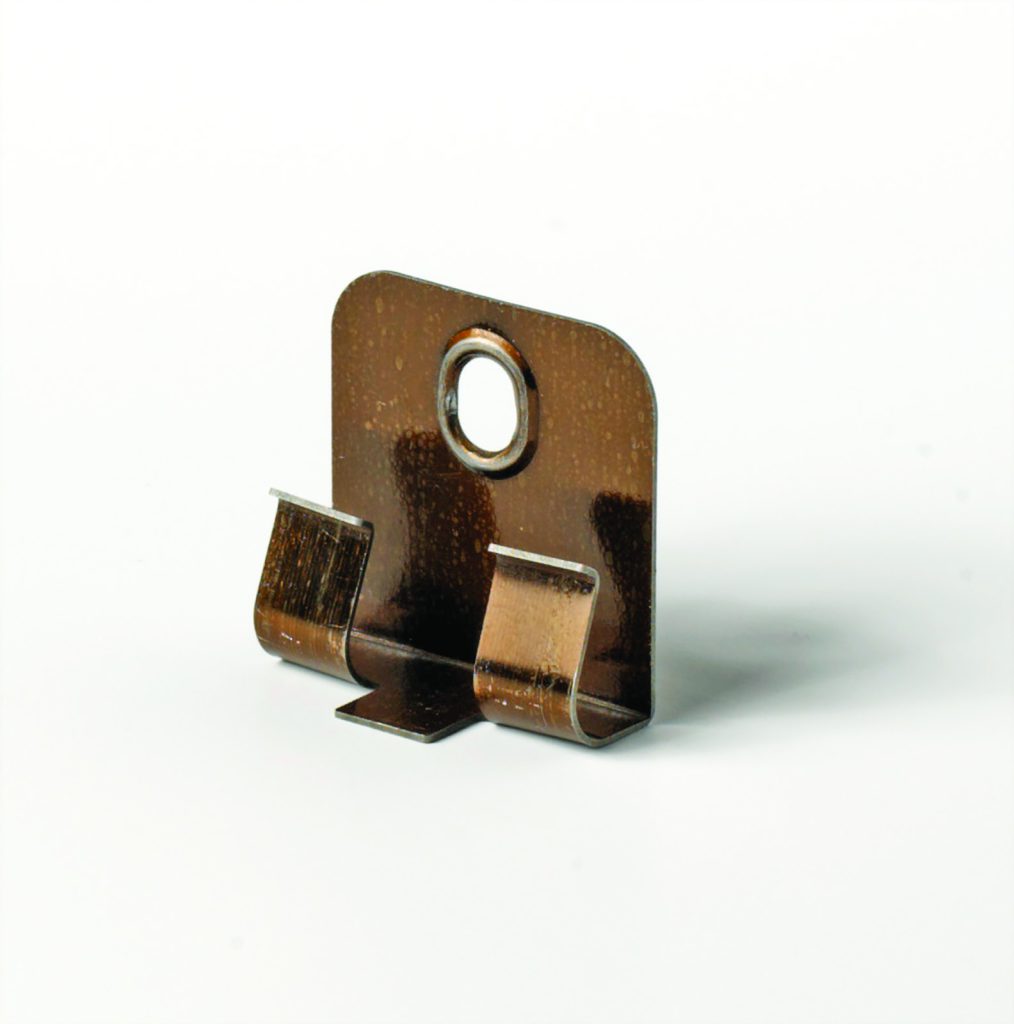
The favourite option to fix gaps between skirting and floor is to replace the skirting boards with either solid wood skirting, oak veneer skirting using the board clips, or traditional painted skirting. Solid wood skirting boards are an excellent choice when you want to match the depth and grain of your floor. They can be sanded and refinished over time, maintaining a consistent look even as the floor ages. Because solid wood naturally moves with changes in humidity, leaving a small expansion gap behind them is important to prevent future warping or cracking. For a timeless finish, they pair beautifully with both traditional and contemporary interiors.
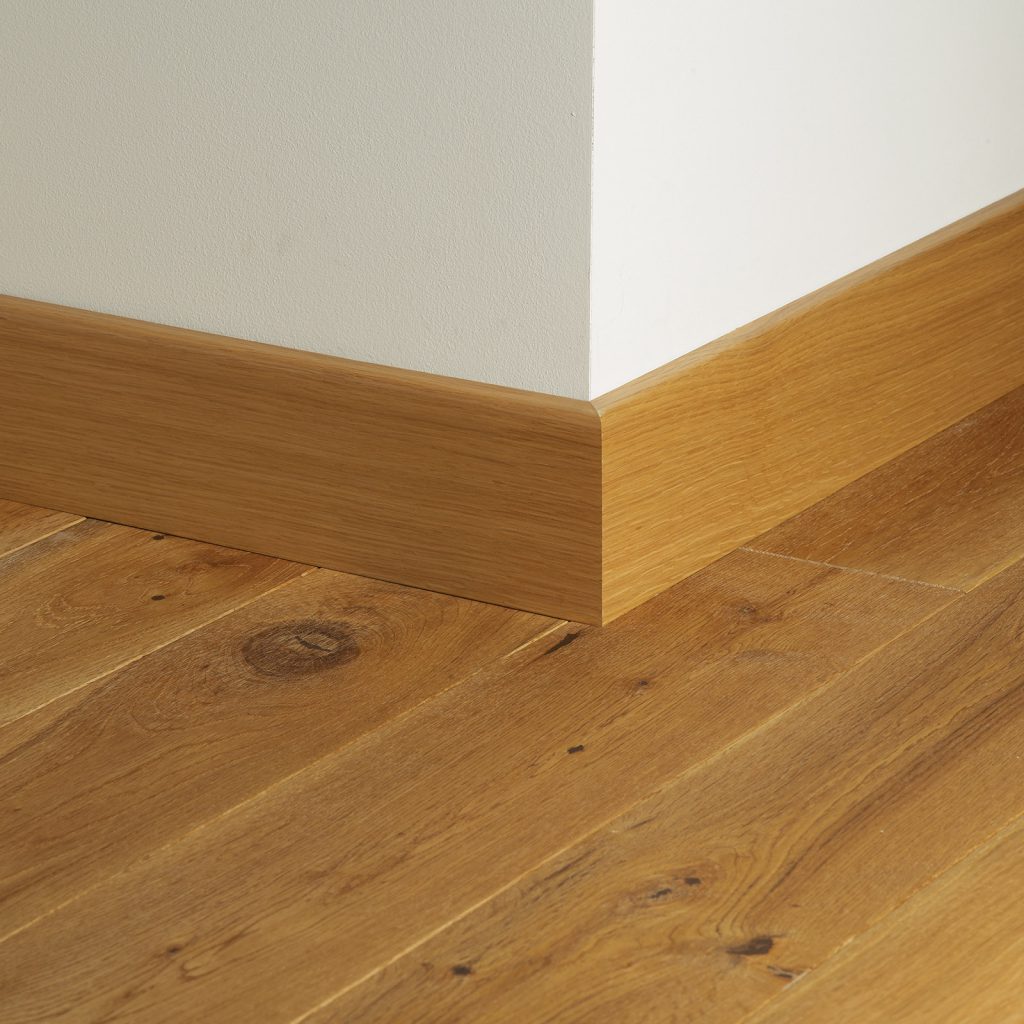
Veneered Skirting Using Skirting Clips
The veneer skirting has clips which are fixed to the wall and the skirting board, allowing the skirting to sit flush with the floor and providing a seamless finish without visible trims. It’s a clean and modern solution, particularly effective in contemporary interiors.
The Simplest Way to Cover a Gap
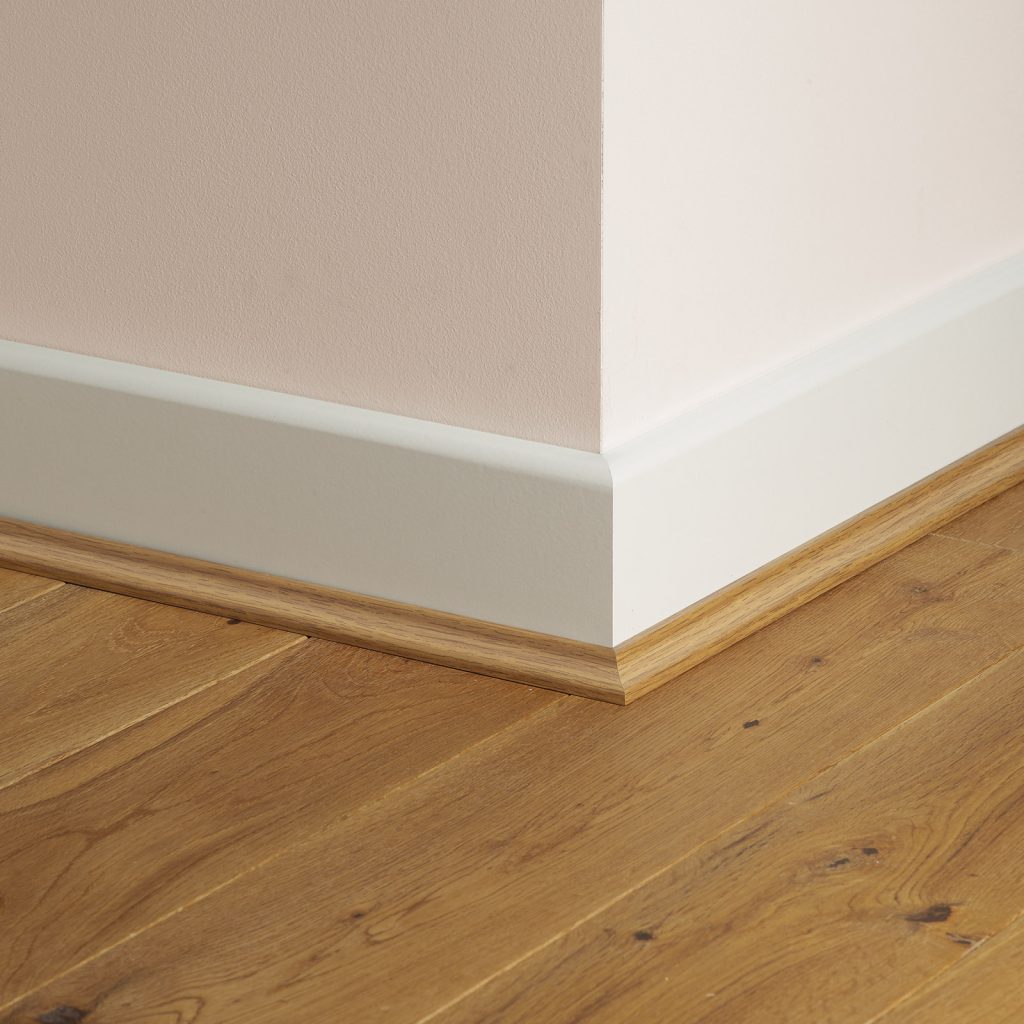
One of the most common fixes is to add a neat trim or beading along the skirting. This instantly conceals the gap and adds a professional finish. Options include:
These trims are designed to complement the character of your floor while hiding any expansion space. For Stratex® floors Brecon scotia beading is recommended. You’ll also find a full collection of finishing touches to complete your project.
Design and floor types
Small finishing details change the overall feel of your room. Just as you might ask should curtains touch the floor, the way your skirting meets your floor matters. A neat trim enhances patterns like herringbone, which you can explore in these tips for successful herringbone installations. Different floors behave differently too, so it helps to understand the differences between LVT and real wood flooring before deciding how to finish edges and expansion gaps.
Smart Solutions for a Seamless Finish
Every home is unique, and the best solution for your gap between skirting and floor depends on the space, the floor type, and the style you want. Whether you choose scotia beading or skirting clips, the result will be a cleaner look. Each method covers or closes the gap, giving you a clear answer to the problem and restoring a seamless finish.
